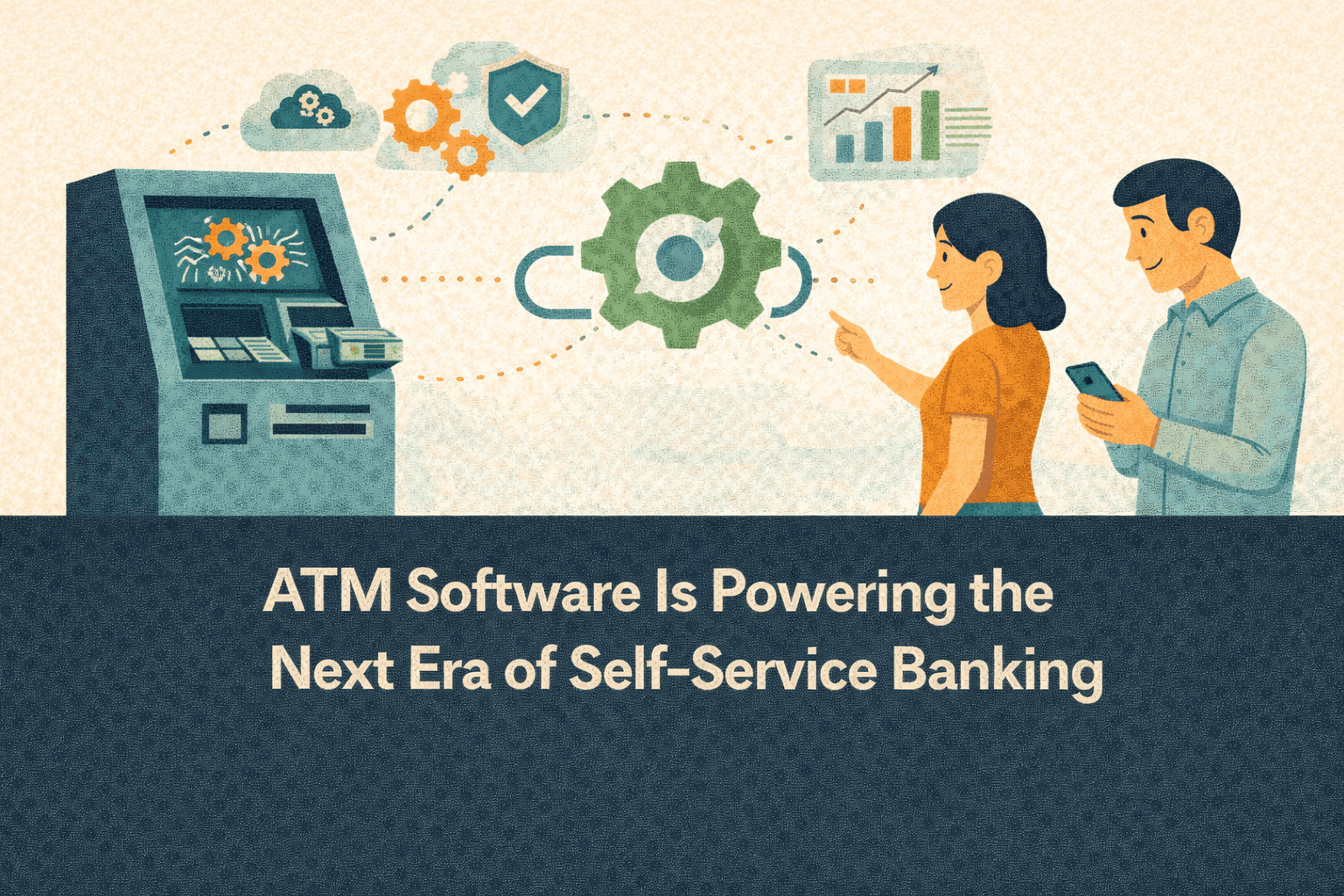
The ATM story is not ending. It is evolving. Across retail banking, ATMs are moving beyond basic cash dispensing and becoming smarter self-service banking platforms for deposits, customer engagement, remote management, and stronger security. In the U.S., banks are relocating ATMs into branch lobbies, expanding deposit ATMs and cash recyclers, and adding more software-driven functionality. Today, 45% of U.S. ATMs feature automated note deposit, 27% support NFC contactless transactions, and 38% use CRM software.
Modern ATM Software Is Driving Branch Transformation
The most important shift is functional, not cosmetic. Branch ATMs already offer more capability than basic off-site terminals, and banks are increasingly tying ATM investments to branch transformation strategies centered on cash-recycling technology. Several major U.S. banks, including Bank of America, JPMorgan Chase, and Wells Fargo, have already upgraded the majority of their ATM estates to cash recyclers. That is a strong signal that the ATM channel is still strategic, but its value now depends more on software, workflow, and integration than on hardware alone.
Remote ATM Management and Software Integration Matter More Than Ever
The bulletin also reveals a clear modernization gap. Banks generally run more sophisticated ATM software stacks than independent deployers, while many ATMs still do not use CRM, cash management, or security software. Banks are also more likely to push software updates remotely. For ATM software providers, that creates a real opportunity: help financial institutions improve uptime, standardize operations, strengthen customer journeys, and manage fleets more efficiently from a central platform.
Security raises the stakes even further. Hyosung Americas warned of attacks targeting ATM remote management software systems in the U.S. and urged deployers to apply a security patch and take additional protective measures. Modern ATM software is therefore not just about features. It is also about secure remote access, fast patching, and tighter control over the ATM estate.
ATM Software Still Supports Essential Cash Access
Cash access remains critical in many markets. In the U.S., many consumers still receive funds via prepaid cards and then withdraw cash at ATMs, with the average bank ATM withdrawal reaching US$228 in 2023. In the U.K., banking hubs now combine counters, kiosks, and ATMs so communities can still access withdrawals, deposits, and account services even after branch closures. In Latin America, ATM numbers are expected to return to growth in 2026, while the annual value of ATM cash withdrawals is projected to rise 40% by 2029. Ecuador’s ATM base grew 8% in 2023, and Mexico’s grew 4%, underscoring the ongoing importance of physical cash infrastructure and the software that supports it.
FAQ
Why is ATM software becoming more important?
Because ATMs are taking on broader roles, including cash recycling, CRM integration, remote updates, and self-service transactions beyond simple cash withdrawal.
Is there still growth potential in the ATM channel?
Yes. The bulletin expects ATM numbers in Latin America to return to growth in 2026, with cash withdrawal value projected to increase 40% by 2029.
Conclusion
ATM software is no longer a back-office utility. It is becoming the operating layer for modern self-service banking. For banks and deployers, the opportunity is not to step away from the ATM channel. It is to upgrade it with better software, stronger security, and smarter customer experiences.
Sources
Banking & Payments Bulletin - June 2025
This text was created by AI.
More Blogs
Read more about the ATM application.