ATM Pooling Networks: How Smart Banks Cut Costs by 40% and Future-Proof Cash Access

Niklas Damhofer
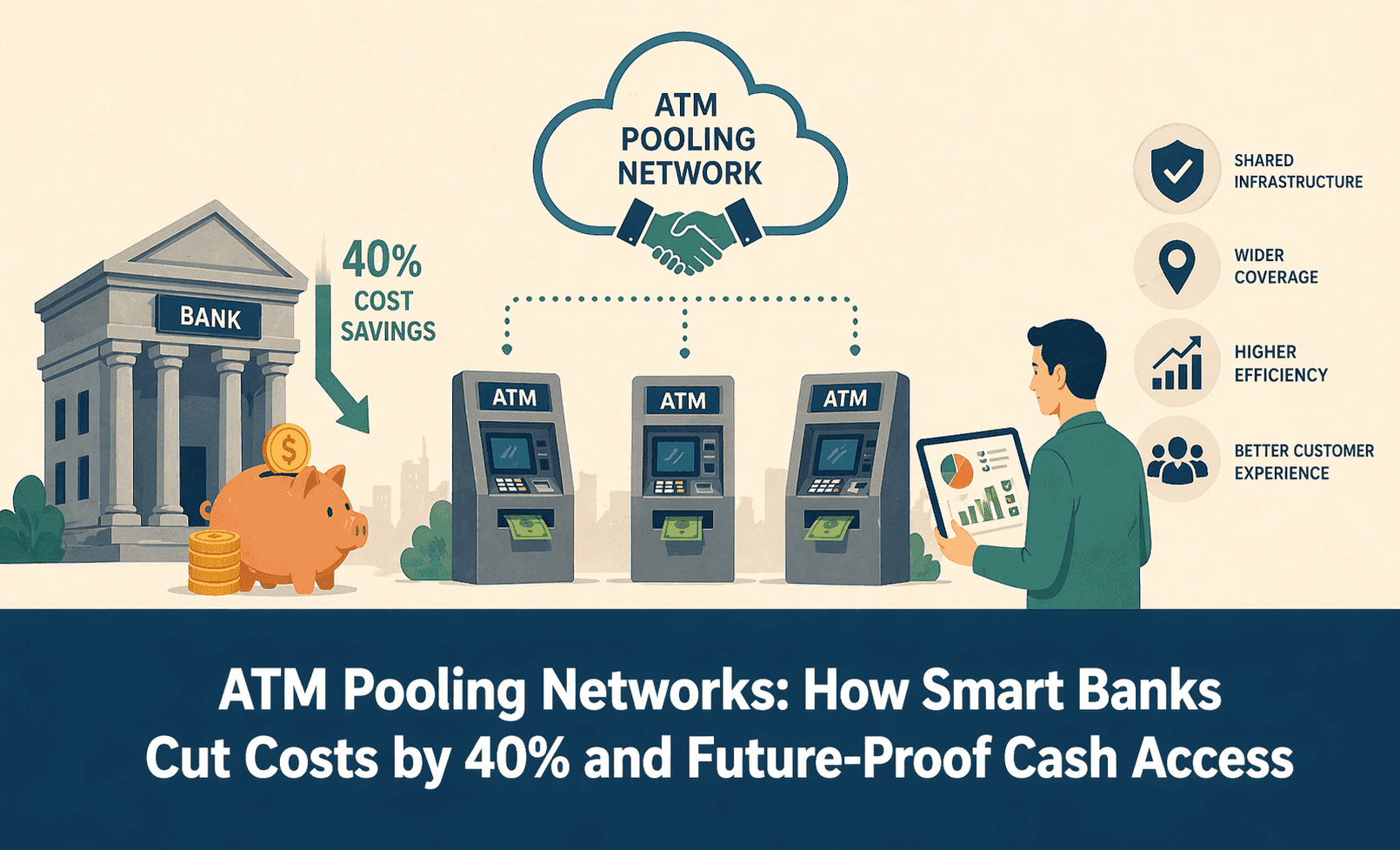
Cash isn't dying. It's getting expensive. Across Europe, banks are discovering that operating solo ATM fleets no longer makes financial sense, and the smartest ones have already found a way out. They're pooling their machines, sharing the costs, and still keeping every customer happy. Welcome to the quiet revolution reshaping how banks deliver cash.
What Is an ATM Pooling Network?
ATM pooling happens when two or more banks transfer ownership of their ATM fleets to a single shared entity that operates every machine on their behalf. Drivers include cost pressures, reduced profitability in the ATM channel, and oversupply in areas where competing banks stack machines just meters apart. Instead of five banks paying five times over for overlapping infrastructure, one neutral network serves everyone.
The Numbers That Convinced Europe's Biggest Banks
The business case writes itself. When five major Swedish banks (SEB, Nordea, Swedbank, Danske Bank, and Handelsbanken) launched Bankomat in 2010, they reduced their combined fleet from 2,700 terminals to 1,200 and cut ATM network management costs by 40%.
The Netherlands followed with Geldmaat in 2019. ABN AMRO, ING, and Rabobank shrank a combined 6,400 ATMs down to roughly 3,800 while still guaranteeing 99% of Dutch cardholders live within five kilometers of a machine [source: Tietoevry, tietoevry.com]. Belgium's Batopin, backed by BNP Paribas Fortis, Belfius, ING, and KBC, targets the same 5 km benchmark for 95% of the population. Brazil's TecBan operates over 23,000 shared ATMs under the Banco24Horas brand, once saving a single member bank $500,000 per year simply by eliminating 8,000 redundant machines.
Why ATM Pooling Beats Going Solo
Shared infrastructure delivers benefits no individual bank can match:
Lower operating costs: Installation, cash-in-transit, maintenance, and security expenses split across every participating institution
Wider coverage: Pooled fleets reach rural and underserved areas where a single bank couldn't justify a terminal.
Modernized placement: Banks rethink locations, moving machines from dated branch lobbies to shopping centers and transit hubs where customers actually are.
Sustainability wins: Fewer machines mean less energy consumption and lower cash-transport emissions.
The Bottom Line
ATM pooling isn't a trend. It's the new blueprint for cash distribution. Banks that act now cut costs, keep customers, and meet tightening government mandates on cash access. Those that wait will pay more to do less. The playbook already exists. The only question is who runs it next.
Sources
Tietoevry — ATM Pooling: A cost-effective solution for a new cash reality
Auriga — ATM Pooling (Quick Guide)
bobsguide — A quick guide to ATM pooling
ATM Marketplace — ATM pooling leads to branch transformation
Datos Insights — Pooling Resources: How ATM Deployers Are Finding New Ways to Optimise Networks
ATMIA — ATM Pooling: Enhancing Efficiency and Reducing Costs in Cash Management
The Fintech Times — How can ATM Pooling Transform Access to Cash?
ATM Marketplace — Innovative Models for Efficient and Sustainable ATM Channel Management