ATM Automation Software: How Rule-Based Automation Cuts Costs and Keeps Your Fleet Running

Niklas Damhofer
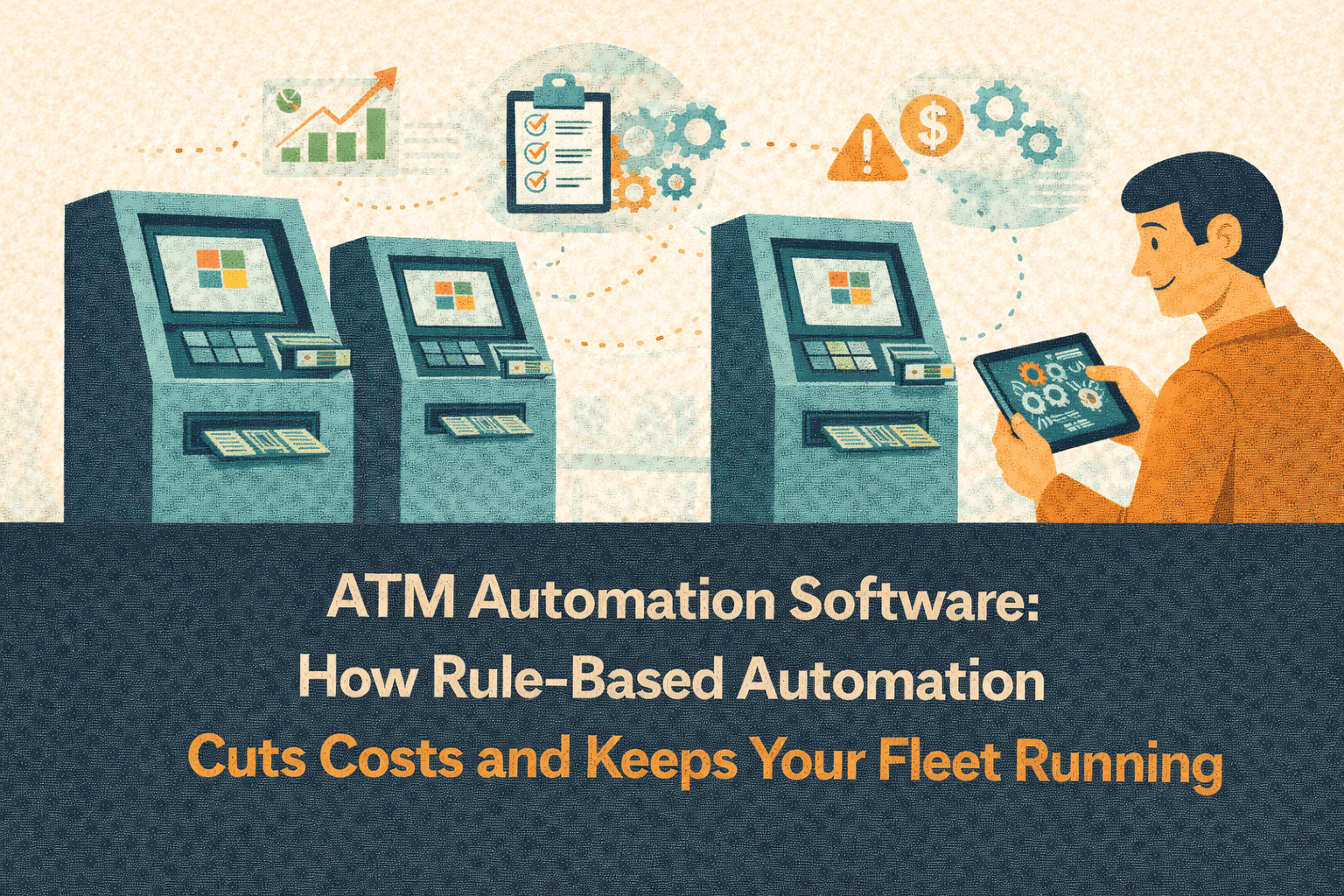
Managing a large ATM fleet is a constant balancing act. Machines go offline. Cash runs low. Tickets pile up. Engineers get dispatched to faults that could have fixed themselves. For ATM fleet managers and bank operations teams, the pressure to reduce downtime while cutting operational costs has never been higher.
The answer isn't more staff. It's smarter automation.
The Hidden Cost of Manual ATM Operations
Most ATM operations still rely heavily on manual processes. A machine throws an error — someone spots it, someone logs a ticket, someone decides whether to dispatch an engineer or wait it out. By the time the right person takes the right action, the ATM may have been out of service for hours.
According to RBR Data Services, ATM networks across Europe have shrunk by 9% over the last five years. With fewer machines serving the same customer base, every hour of unnecessary downtime carries a real cost — in lost transactions, in customer frustration, and in brand reputation.
The same pressure applies to cash management. CIT (cash-in-transit) visits are expensive. Sending a van to a machine that still has adequate cash is pure waste. Missing a machine that's about to run dry is even worse.
What Is Rule-Based ATM Automation?
Rule-based ATM automation means defining a set of logical conditions — "if this happens, do that" — and letting software execute those responses automatically, without human intervention.
For example:
If an ATM reports a card reader error, automatically attempt a reset before opening a ticket.
If a machine goes offline during peak hours, immediately escalate to on-call engineering.
If cash in a cassette drops below a defined threshold, automatically trigger a replenishment order.
The power of this approach is consistency and speed. Rules execute in seconds, 24/7, with no delays caused by shift changes, holidays, or human error.
Automated Ticket Management: Eliminating the Paper Chase
One of the biggest productivity drains in ATM operations is ticket management. Engineers receive duplicate alerts. Tickets get opened for faults that self-resolve. Teams waste time chasing status updates on issues that are already fixed.
With automated ticket management, every event in your ATM network follows a defined workflow. Tickets open automatically when a fault is detected, update in real time as the situation evolves, and close automatically once the issue is resolved — whether by a self-healing process or an engineer on-site. No manual logging. No forgotten follow-ups. No duplicate dispatches.
Self-Healing ATM Processes: Fix First, Escalate Second
Not every ATM fault needs a human. Many common errors — sensor glitches, software hangs, temporary connectivity drops — can be resolved by automated recovery routines. Self-healing automation attempts these fixes the moment a fault is detected, before any engineer is involved.
This means your team only gets called in for faults that genuinely need them. The result is fewer unnecessary callouts, lower maintenance costs, and significantly faster average resolution times across your fleet.
The Business Case: What ATM Automation Actually Delivers
For ATM fleet managers and bank operations teams, the benefits are concrete:
Reduced downtime: Faults are detected and acted on instantly, around the clock, without waiting for a human to notice and respond.
Lower CIT and maintenance costs: Automated scheduling means engineers and cash vans only go where they're actually needed.
Leaner operations teams: Automation handles the routine. Your people handle the exceptions.
Better SLA compliance: Consistent, rules-driven responses mean fewer breaches and more predictable service levels.
Full audit trail: Every automated action is logged, giving you complete visibility and accountability across your entire fleet.
Ready to Automate Your ATM Fleet?
If your team is still managing ATM faults and tickets manually, you're leaving efficiency, and money on the table. Rule-based ATM automation is no longer a nice-to-have. For any fleet of significant size, it's becoming the baseline expectation.
KIXOmatic is purpose-built for exactly this challenge: rule-based automation, automated ticket lifecycle management, and self-healing workflows, all in one platform. Whether you're managing 500 ATMs or 50,000, it gives your operations team the tools to respond faster, spend less, and sleep better.