Contactless ATM Software Has to Complete the Whole Journey
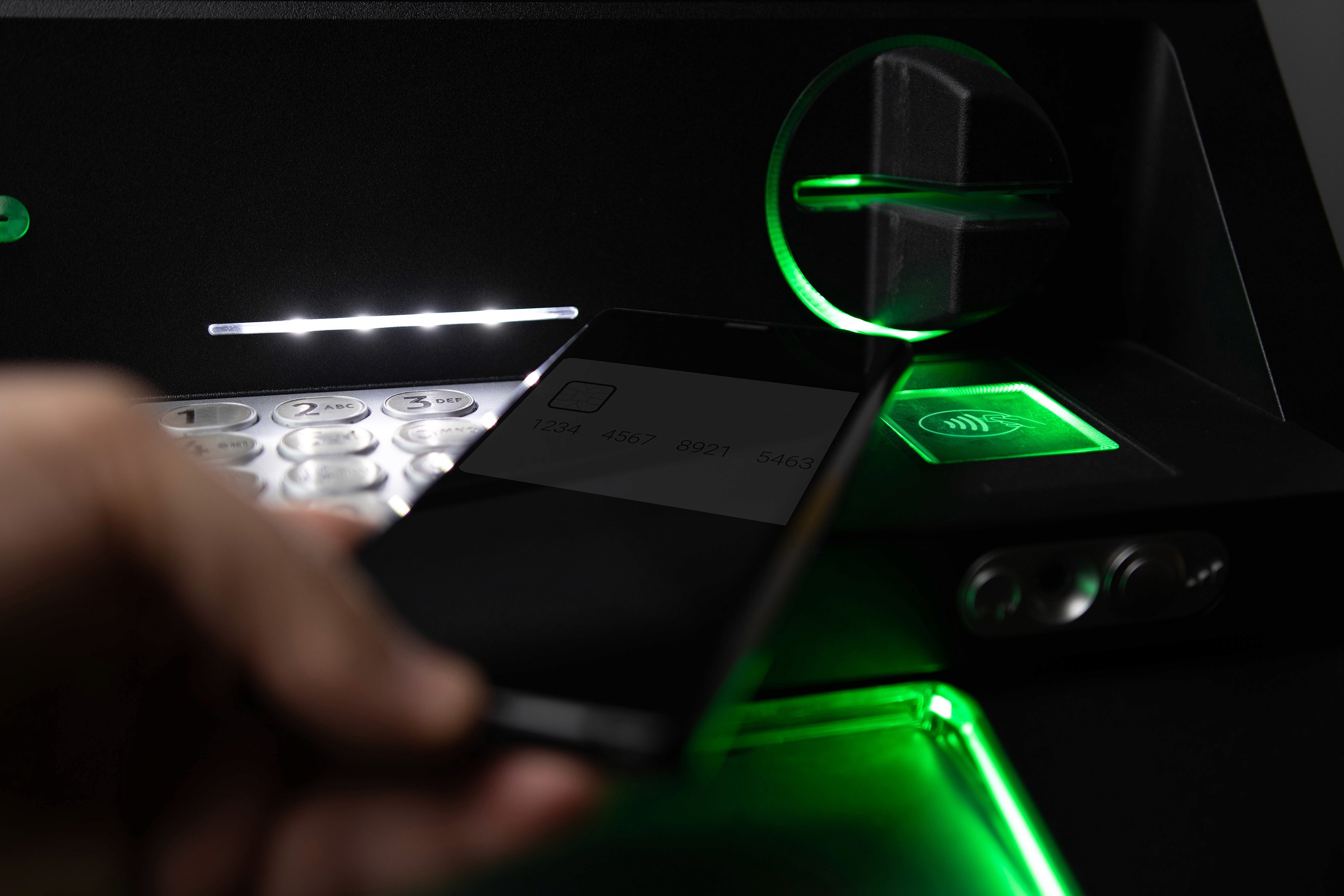
In Italy, 62% of ATMs supported contactless transactions in 2025. That is a measure of installed ATM capability, not a count of contactless withdrawals or a forecast based on shoppers tapping at a till. Italian ATM withdrawals still fell 5% that year, to 998 million. The question for a deployer is what the reader, software, host, and customer interface must do together when someone taps a card or device and requests cash.
The same Italy profile describes a market with varied ATM management applications and suppliers. A contactless rollout across that estate needs a defined transaction flow and testing on the relevant combinations, not a reader fitted to the fascia alone.
Define the Contactless ATM Software Stack
Contactless technology covers communication between a card or NFC-enabled device and an acceptance device, as well as the processing performed by a contactless kernel. The kernel supplies transaction functions within the acceptance device; product approval and evaluation test conformance to the relevant EMV specifications. That helps teams separate reader capability, kernel behavior, and the complete ATM application.
At the device layer, the XFS workshop publishes a multivendor interface for financial peripherals, including card reader, PIN keypad, and cash dispenser classes. Its version migration materials make one implementation detail visible: an interface name does not tell the team which release and device service is installed. Test the tap, authentication, host response, cash dispense, and customer exit path on the actual ATM configuration. The sequence is a practical integration plan drawn from the separate interface and transaction components.
Check What Adding NFC Changes at the Machine
An NFC pad is another component at a public terminal. ATM security guidance calls out the integration of contactless reading pads as a change to assess, and recommends documenting hardware modifications that might alter protection. It also describes protection of contactless data from the point where the NFC controller digitizes it. Physical placement, communication, and maintenance therefore belong in the release review along with transaction software.
A complete test should include unsuccessful taps and a clear route back to another supported method. A contactless option is only useful if the customer understands when to tap, what happens next, and how to finish or cancel. The specific fallback depends on the machine and bank service; the evidence here supports evaluating the full interface and security path, not promising that every card or phone will work at every ATM.
Keep the New Flow Accessible
EU accessibility rules cover ATMs as well as banking services. European guidance points to multisensory ATM interfaces for people with vision impairments and physical height requirements that support wheelchair users and people of small stature. A new tap prompt or on-screen instruction should therefore be reviewed within the whole accessible journey, including feedback after an unreadable tap or an interrupted withdrawal.
Build the transaction first, then validate device combinations, security changes, and accessible interaction before adding the contactless option across the fleet. SBS supports the software implementation through its contactless EMV Kernel and KIXCustomer ATM application. The bank defines supported customer credentials, its host integration, and the service experience.
Frequently Asked Questions
Does a contactless reader mean an ATM accepts every mobile wallet?
No. A reader's presence does not establish which credentials, schemes, issuer routes, or transactions are supported. Confirm the deployed software and end-to-end service for the intended users.
What does a contactless kernel do at an ATM?
It provides functions for processing the contactless interaction within the acceptance device. The complete withdrawal also depends on the ATM application, host authorization, and cash-dispenser path.
Why test contactless ATMs on different machine models?
Card reader, PIN, and cash-dispensing device services can differ across configurations and interface versions. Test successful and failed transactions on the combinations that will be deployed.
Does contactless access remove other accessibility work?
No. ATMs covered by EU accessibility rules still need an accessible interface and physical usability. Review the tap prompt, feedback, and recovery path for customers using different modes of interaction.
Sources
Datos Insights, Banking & Payments Bulletin, September 2026: Italy country profile
https://datos-insights.com/banking-and-payments-bulletin/EMVCo, EMV Contactless Chip
https://www.emvco.com/emv-technologies/emv-contactless-chip/AFNOR, Extensions for Financial Services (XFS) Interface Specification: CWA 16926, Release 3.51
https://normalisation.afnor.org/en/xfs-extensions-for-financial-services/cwa-16926-3-51-release/PCI Security Standards Council, PCI PTS ATM Security Guidelines
https://listings.pcisecuritystandards.org/pdfs/PCI_ATM_Security_Guidelines_Info_Supplement.pdfEuropean Commission AccessibleEU Centre, A new era for inclusion begins: The EAA enters into force
https://accessible-eu-centre.ec.europa.eu/content-corner/news/new-era-inclusion-begins-eaa-enters-force-2025-06-27_en
This text was created by AI.
More Blogs
Read more about EMV kernels and certification.